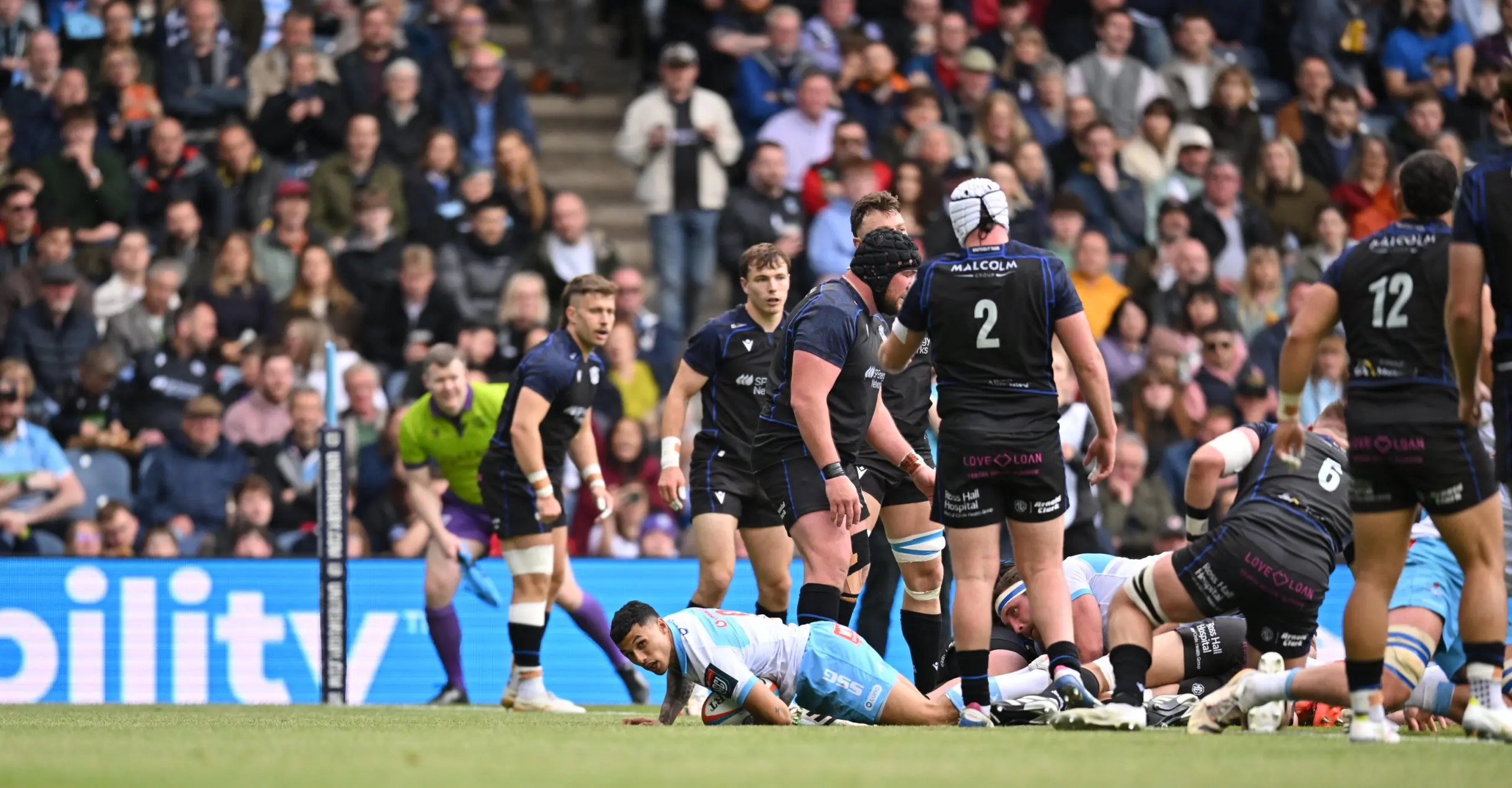

A phenomenal second-half recovery saw the Vodacom Bulls overcome two first-half yellow cards and an 18-point deficit to secure a dramatic 22-21 victory over Glasgow Warriors at Murrayfield on Saturday, booking their place in the Vodacom United Rugby Championship final.
Trailing 21-3 after a disciplinary crisis inside the opening 25 minutes, the Pretoria franchise launched a ferocious comeback, sparked by a critical halftime mandate from coach Johan Ackermann to hunt down the opening score of the second period.
A maiden Vodacom Bulls try from prop François Klopper and a flawless defensive shutdown in the second half ultimately sealed the one-point heist, which Ackermann afterwards hailed as the finest character-driven victory of his coaching career.
The coach admitted he was momentarily lost for words when the final whistle blew at Murrayfield.
“This must be right at the top,” he said, his voice carrying the quiet weight of a victory that defied every tactical law of knockout rugby. “The comeback is special . . . because they were really playing good rugby. This is probably one of the best victories I’ve had, just the character that the guys showed.”
For Ackermann, this wasn’t just a tactical win to secure a spot in the Vodacom United Rugby Championship final; it was a profound triumph over an afternoon that threatened to tear his side apart.
When you are 21-3 down away from home, playing with 13 men after two yellow cards, a coaching box can easily become a place of panic. Glasgow were carving up the midfield defence, an area Ackermann noted will need a massive review before the final.
But inside the stadium dressing room at halftime, trailing 21-10, Ackermann didn’t deliver a fiery sermon or a complex tactical overhaul. He chose instead to shrink the problem into one singular, achievable task.
“My only thing was, guys, we’re 21-10 down. I only ask one thing: let’s go score the first try. If we score the first try and it’s 21-17, then we’re in the game. And the boys responded to that.”
By focusing entirely on the next five minutes rather than the scoreboard, Ackermann allowed his players to find their breath. The senior leaders stood up, refusing to let the squad “go into their shells.”
When that first second-half try arrived, Ackermann saw the visible injection of belief that ultimately carried them home.
In the cold light of day, the review sessions will look at the imperfections. Handré Pollard had a rare, difficult night off the tee, leaving critical points on the field. Yet Ackermann’s reflection on the goal-kicking crisis reveals the calm perspective that has guided this team through the season.
“Handre just said in the team talk now he’s going to practice his goal kicking a bit,” Ackermann smiled, refusing to lay blame on his playmaker. “One game that he missed won’t make him a bad player. In actual fact, one of the coaches made the comment that it kept Glasgow in their half, even the misses. You can always look at the positive. Luckily, the kicks didn’t count at the end.”
Instead of focusing on the misses, the coach shone the spotlight directly on the men who anchored the comeback:
François Klopper, who Ackermann single-out as “outstanding” in the first half and was justly rewarded with his first Bulls try in the second.
Johan Grobbelaar, delivering a massive shift in his 150th game.
Captain Marcell Coetzee, putting his body on the line for his 100th cap.
The bench, with Ackermann noting that “every player that came on made a difference.”
Perhaps the most telling moment of Ackermann’s reflection came when asked to look back at the team’s dismal losing streak earlier in the season. For a coach, those are the lonely spaces where self-doubt creeps in.
“If you’re in a spiral like that, you wouldn’t have imagined or thought that you would play in the final,” he confessed with striking candour. “To lose consecutive games always brings a little bit of doubt in your own ability. Are you doing the right things? That’s why this final will be very special for me personally.”
Ultimately, Ackermann refused to take the credit for steering the ship through those dark waters back into a fourth VURC final. He credited the players who didn’t even make the matchday squad for providing the week’s energy, and he pointed to a support system far greater than rugby.
“It’s not about me. It’s about the people around me, one’s wife and children, people who pray for you. People that believe there’s a bigger purpose than me just being a coach.”
The Vodacom Bulls now fly back to South Africa to recover, and to heal their bumps and bruises. They go home damaged from a brutal semifinal, but entirely whole in spirit, led by a coach who knows exactly how to find clarity amid the chaos.