
Pretoria in the off-season is never quiet, but this year it hums with something sharper: the sound of a squad being remade in real time, under a coach who has a good lie of the land, with the biggest fixture on the calendar fast bearing down on them.
Johan Ackermann’s first year in charge of the Vodacom Bulls ended in a VURC final, and it began, by his own admission, under challenging circumstances.
“By January, everything looked like we were not gonna even make the playoffs,” he says, without flinching from the memory. What followed, a surge into a final against long odds, is either proof of a squad finding itself under pressure or a coach discovering, in real time, exactly what he had to work with. Probably both.
There is no easing into year two. Before the VURC campaign even begins in earnest in September, the All Blacks arrive in Pretoria for an August 15 showdown, and Ackermann knows exactly what that fixture means, for him, for his players, and for a city that will be painted blue and holding its breath.
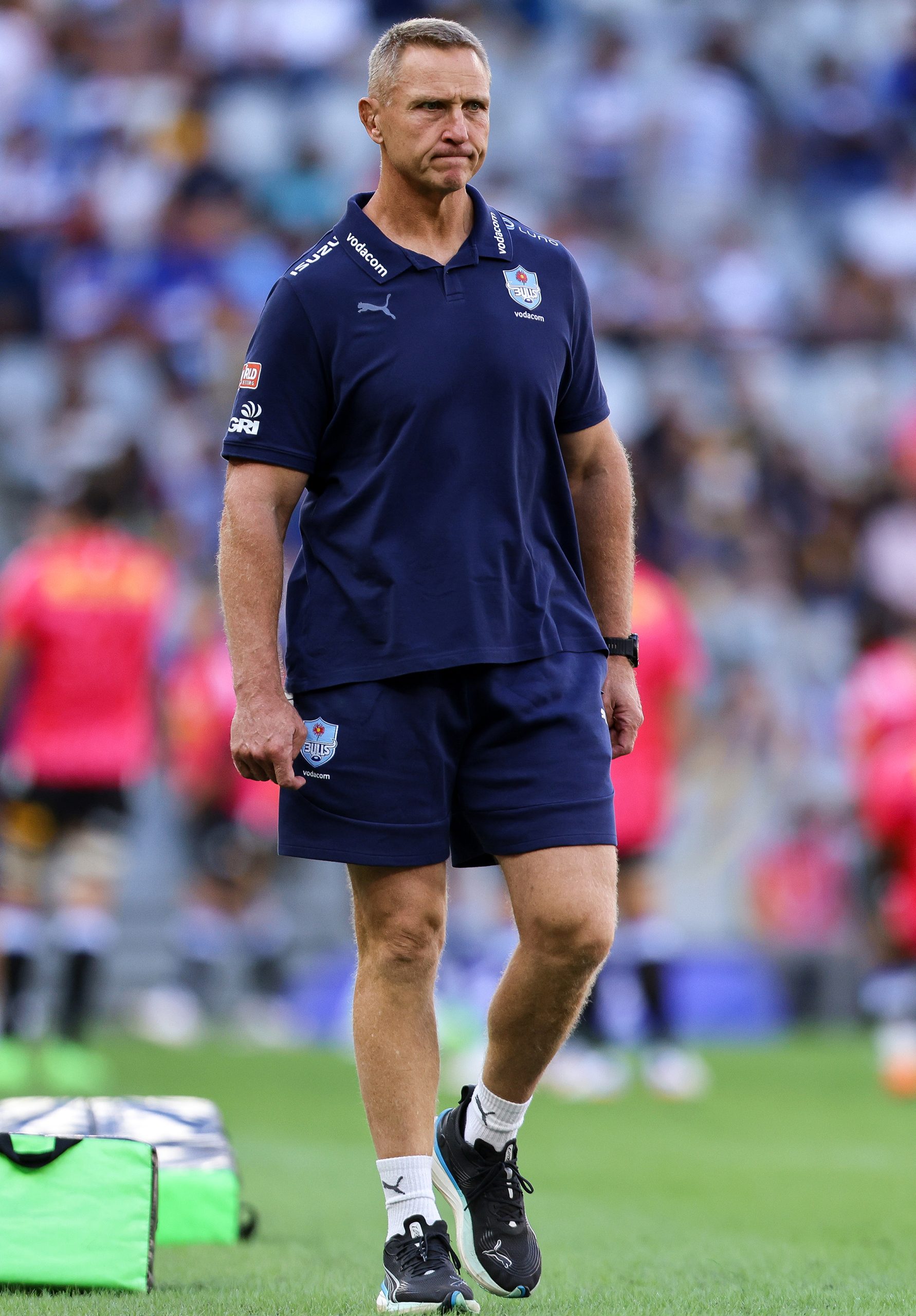
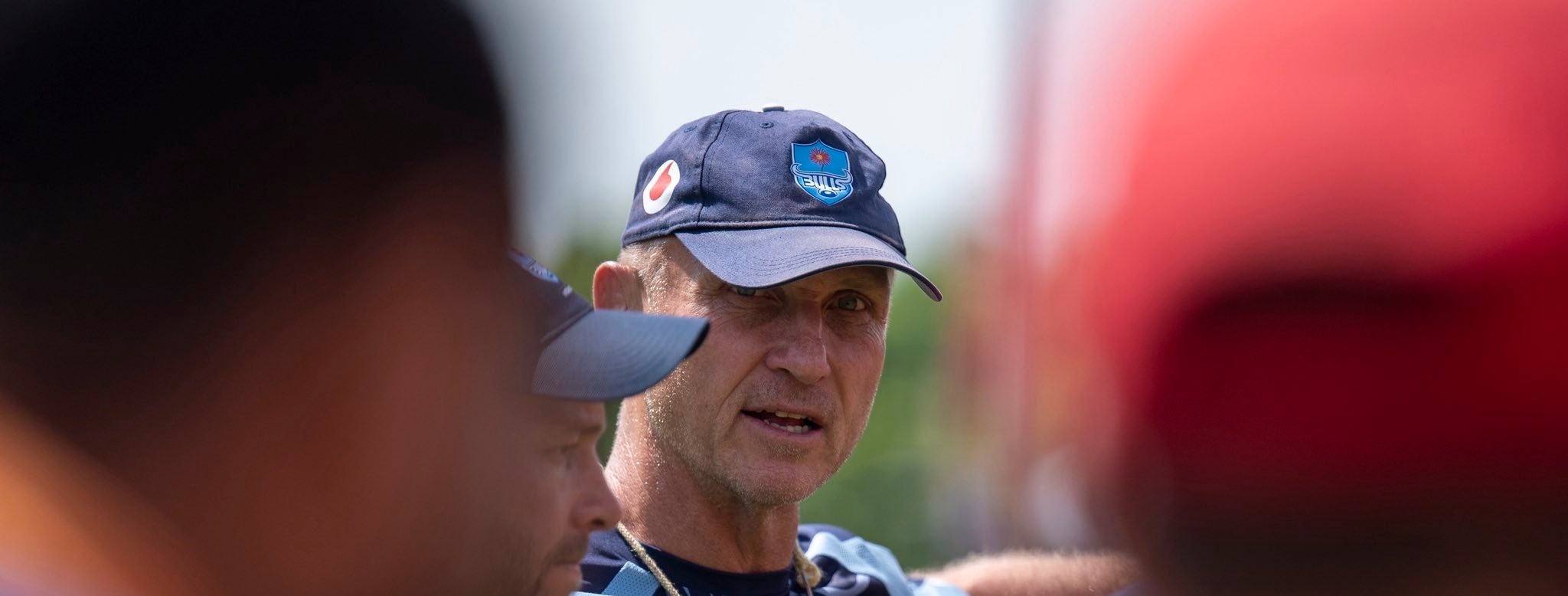
Johan Ackermann – large and in charge. ©INPHO/Steve Haag Sports/EJ Langner
He has stood on the other side of that occasion himself, as a Springbok, and he still talks about it with something close to reverence. “Wherever the All Blacks play, worldwide, you look at the following they get,” he says, “and the tradition, and so on.”
It is the rare match that turns a pre-season into theatre, and for some of his youngest players it may be the only time in their careers they get to test themselves against the game’s most storied jersey. Reflective as this moment is for Ackermann, looking back at a season that nearly unravelled before it began, it is that fixture, just weeks away, that sharpens everything happening in Pretoria right now.
Reflections on the VURC
Ackermann does not talk like a man polishing a highlight reel. He talks like a man doing an audit. “It was a challenging Vodacom URC tournament,” he says plainly, “because obviously it’s one’s first one.”
The challenge was not just tactical. It was human. Walking into a “quite settled group that has gone through a lot” meant starting from zero on trust, in both directions. “They need to learn about you,” he explains, “and you have to both trust in the players, and then the people surrounding you. You start learning people’s character.”
That is not coach-speak. That is a man describing the slow, unglamorous work of actually building something, mid-season changes and all. “Halfway during the season, unfortunately, I had to make a few changes,” he admits, and with every change came new relationships that had to perform under pressure before they had time to properly form.
Layer onto that a rugby landscape that had shifted entirely since Ackermann last coached on home soil, and the scale of year one becomes clearer.
“The landscape of South African rugby has changed drastically since I left [for Japan and the UK],” he says, pointing to interlinking competitions, new rest structures, and the ongoing project of building “a culture, and a philosophy, that something the players can believe in.”
His own verdict is refreshingly unsentimental. “We haven’t achieved, I think, everything we wanted to achieve, reviewing the season.”
Progress, not perfection. That is the mood heading into year two.
Fitter, better, stronger
If year one was about survival and identity, year two is being built on a single, blunt admission: the Vodacom Bulls were not quite sharp enough for the rugby they want to play.
“The way we want to play the game, we need to be a bit fitter,” Ackermann says, and it is not a passing comment, it is the foundation of one of the biggest changes in his backroom staff.
Enter Rupert Oberholster, the new head of athletic performance, brought in specifically to hone a system. “His strength is how to get the best out of players,” Ackermann says of his new appointment, “and also his own systems, communication between the coaching staff and the medical staff.”
It is a partnership rooted in more than a CV. “Rupert almost thinks like I think,” Ackermann says, the kind of line that only gets said about people you trust completely.
The timing of that appointment matters, because this pre-season is barely a pre-season at all. With the All Blacks looming as a marquee fixture before the VURC campaign proper begins, Ackermann is threading a needle few coaches would envy: building fitness for a whole season while readying a match-day squad for one of the most intense tests rugby has to offer.
“We probably do a little bit more conditioning than a normal week, game preparation,” he explains, “but it is a tough balance, because we can’t just do conditioning, but not get contact-ready.”
This is no exhibition. “It’s not a warm up game where you play 30 odd players,” he says. “This is a full official match.”
Behind the scenes, that means fast-tracking bodies that other unions, thanks to shorter playoff runs, have already had weeks to recover.
Rugby’s Greatest Rivalry
Come back to that fixture now and the weight of it only grows. This is not a warm-up game to be managed and forgotten, and Ackermann does not treat it as one. For the young players around him, some of whom have never worn a national jersey, he sees something rarer than a result.
“It’s a memory that will last forever with them,” he says. “A great opportunity to measure yourself, but also to experience something that you’ve always probably only watched on TV.”
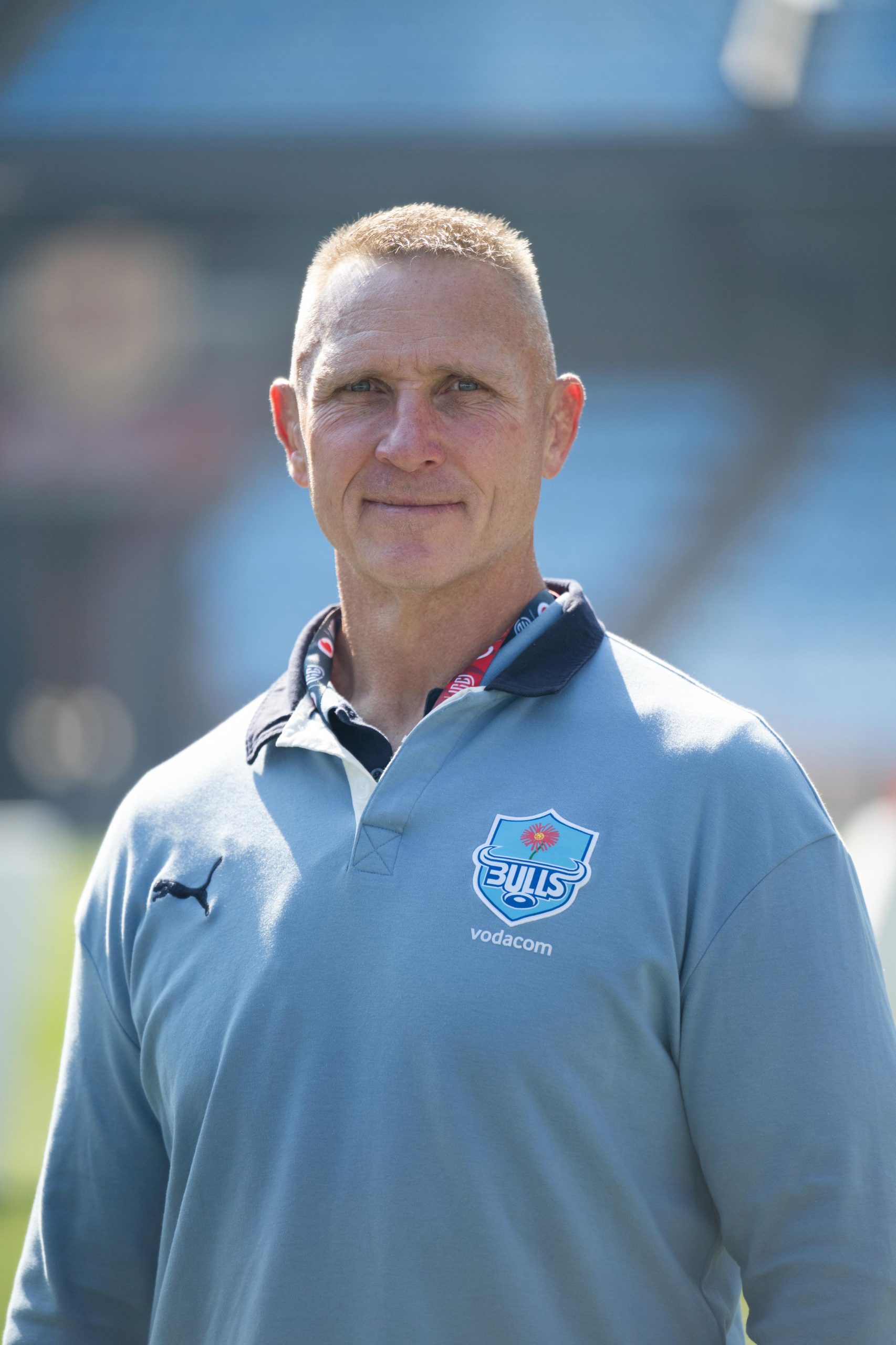
Ask Ackermann to extend that thinking to the Springboks’ own series against the All Blacks in Rugby’s Greatest Rivalry this year, and the coach in him gives way, briefly, to the analyst. Having twice played New Zealand himself, he is generous about the opposition.
“The All Blacks will be a different team with Dave Rennie,” he says, crediting the new coach’s ability to galvanise a squad and reshape a brand of rugby that had looked shaky until recently.
But his conviction does not waver. “I still think the Springboks will win,” he says, “because I think we’re still settled, in our experience and depth, and quality, and set piece.”
It is vintage Ackermann: respect for the opponent, total belief in the fundamentals. “Everything in me says that the Springboks will be just too strong.”
Comings and goings
That same tension between respect and conviction runs through his view of his own rebuilt squad. Departures like Ruan Nortje, Wilco Louw and Kurt-Lee Arendse have left real gaps, and Ackermann does not dress that up. “We’ve lost quality players,” he says simply. But the new arrivals, he insists, are not just replacements, they are a shift in identity.
These include players like Thaakir Abrahams, Curwin Bosch, Hanro Liebenberg, Dylan Maart, and others.
“They bring a different DNA,” he says, “and we can play, I think, a little bit differently.”
Even so, he resists the temptation to chase every gap with a signature. “The more you change, the longer it takes you to settle into a squad,” he warns, before landing on the line that will likely define his season. “Talent is one thing, but it’s that cohesion, and that spirit, that we must keep alive.
“I’m excited about the players coming in, but just as excited about the players we already have, our youngsters. I want them to realise they need to put pressure on the senior players. You want players to come through from within, and the only way that happens is if they put their hands up. Hopefully now, through Currie Cup rugby and by training with us, some of these young players will show us that in the future we can hand them the jersey rather than going outside the union to find it.”
There is a version of this Vodacom Bulls season that is simply about results. Ackermann is not interested in that version. He is interested in a team that trusts each other enough to survive the version of themselves that nearly missed the playoffs in January and still found their way to a final in May.
Fitter this time. Better resourced this time. Still learning, by his own account, but no longer starting from zero.
“We are all still hurting,” he admits of that final defeat, before adding the line that captures the whole season ahead. “Sometimes you have to take something aside, to really see the good in things, and there were a lot of positives.”