
Vlok Cilliers is back where his coaching career took flight, returning to the Vodacom Bulls as kicking coach after a decorated seven-year spell with the French national team, and he says the pull of Loftus Versfeld, an old friendship with Johan Ackermann, and unfinished business at the union he once helped build into a powerhouse proved impossible to resist.
Cilliers spent 10 years at the Vodacom Bulls between 2003 and 2014, a period that yielded three Super Rugby titles and three Currie Cup triumphs, working closely with some of South African rugby’s most celebrated boots, including Derick Hougaard and Morné Steyn. From there he moved to the Stormers before linking up with Fabien Galthié’s France set-up in 2019, where he helped Les Bleus win three Six Nations titles and establish themselves among the most feared attacking sides in world rugby.
Now, after seven years away, he is home. “A new challenge,” Cilliers said of his decision to return. “Being with France for seven years was an amazing time, and I picked up so much experience. Then me and Johan started talking and chasing ideas, and I said I want to come back. One thing led to another, and I think it’s a perfect set-up to come back to. The Vodacom Bulls have all the potential . . . they have all the players and the coaches to win a trophy again. They can become even better.”
That last line, delivered almost as an aside, captures much of what drives Cilliers as a coach. Having already helped build one Vodacom Bulls dynasty, he clearly believes there is another waiting to be shaped.
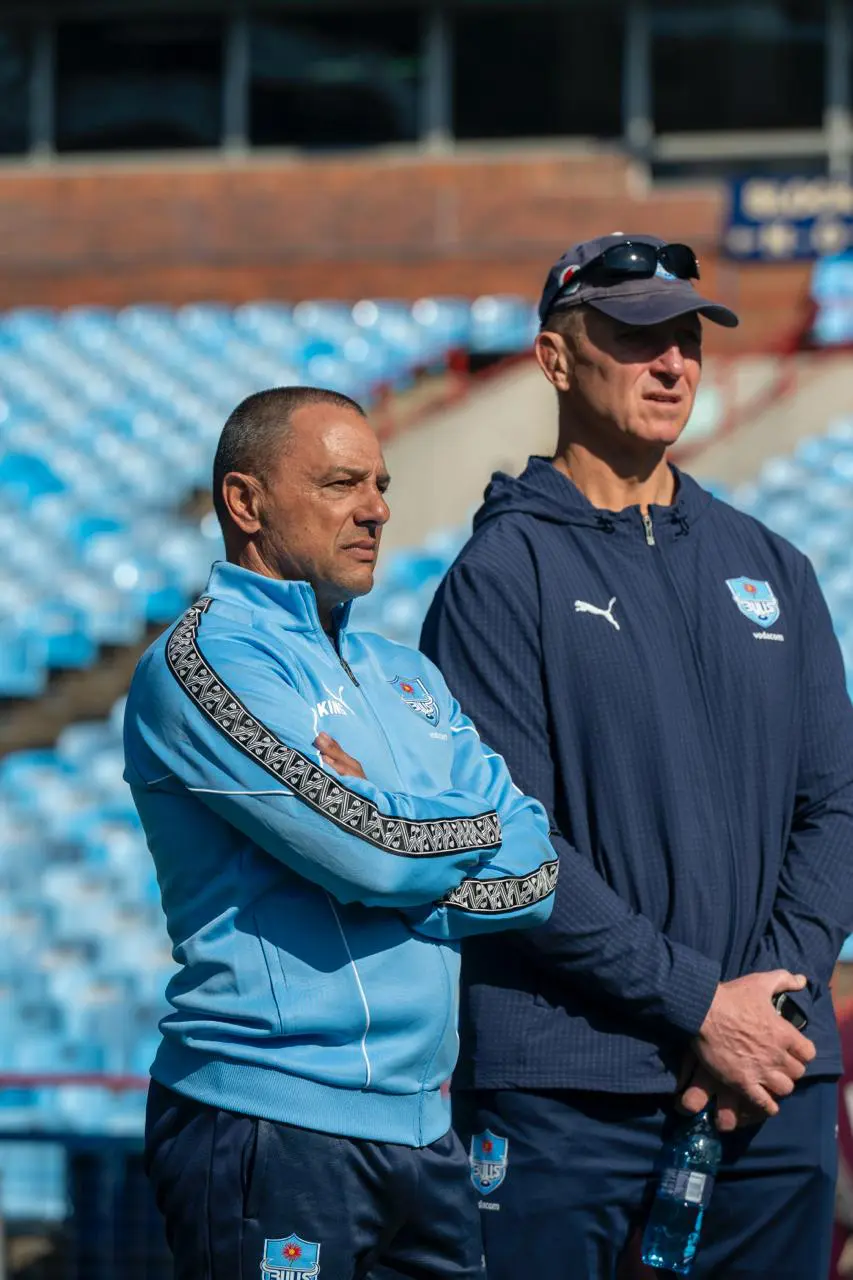
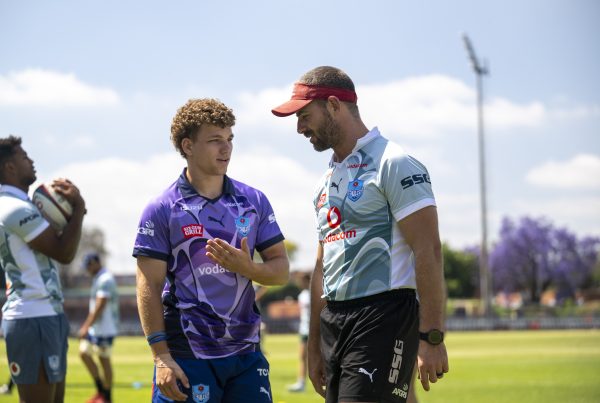
Brothers in arms . . . Vlok Cilliers and head coach Johan Ackermann.
His years in France were, by his own admission, the pinnacle of his coaching journey, a chance to work at the very top of the international game. “For me, first to experience Test match rugby, which is the ultimate, obviously you want to be part of it, and then you have to go with the opportunities, as I did with France. Antoine Dupont, Thomas Ramos, Mathieu Jalibert – unbelievable to work with such talented players, and to play against the best countries in the world.”
He singled out the Six Nations as a career highlight in itself, describing the tournament’s pageantry and tradition as unlike anything else in the sport. “The highlight is being involved with all the top European countries in the world, which I experienced firsthand, actually being involved. Then you have the tradition before the Test, after the Test, where they go back in suit and tie and have a proper function afterwards. That was a highlight.”
Cilliers’ specific brief in France was to build a kicking structure that had previously been missing, and he explained just how technical and analytical that role became at the elite level. “My job in France was to develop a kicking game, to put structures in place, which they didn’t have. One part was to look after the kicking for the poles and the kicking of individuals, how to make better decisions, kick better, have a better kicking game. How can we put teams under pressure? Where can we put teams under pressure? You have to analyse the opposing teams and then you come back with a plan, and then you have to execute that in a match.”
He was equally direct about how much the demands on modern kickers have escalated, pointing to Ramos as the benchmark. “Nowadays with rugby, I think if you can’t be a 90 percent kicker, you’ll be found out because the level is so much higher now. Thomas Ramos operates around about 90 percent in Test rugby. The margins now are like one or two points when you play against the best teams in the world. Those extra two or three points can be the difference.”
Asked to name the best kicker he has ever coached, Cilliers pointed to a mix of past and present talents. “Morné Steyn is still world class for me. I also had the pleasure of working with Handré Pollard for two or three years, when he was a youngster just coming out of school with the Vodacom Bulls before I left. And then in Cape Town I worked with a young Damian Willemse when he just came from Paul Roos into the pro squad. He was a talented player, but nowadays, I like Jalibert and Ramos, the best kickers currently in the world.”
His own rugby heroes, he revealed, stretched back to the boot-led eras of Springbok rugby he grew up watching on television and radio. “My heroes were guys like Carel du Plessis. I loved Wilfred Cupido, Rob Louw, and Danie Gerber. Those were my heroes because they were on TV, first on the radio, and then when TV came, that was my era.”
Now back working in Afrikaans on the training field for the first time in years, Cilliers admitted the emotional weight of the homecoming caught him by surprise.
“I enjoyed coaching in Afrikaans again, because I was doing it in French, and it was difficult to actually express yourself in France. I spoke to my wife last night, she said she could see me smiling again. And I said yes, because I can use my language, Afrikaans, English, doesn’t matter, but at least the people understand me. I can understand them, I can stand in the team talk, I understand everything.”
The job reunites him with coach Ackermann, with whom he played in the SA Police team in the late 1980s. Ackermann is delighted to team up again.
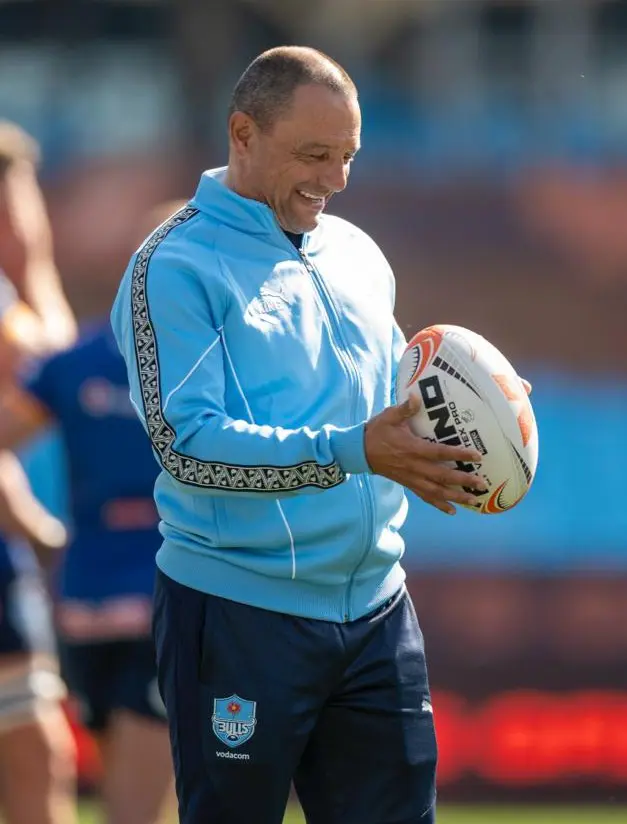
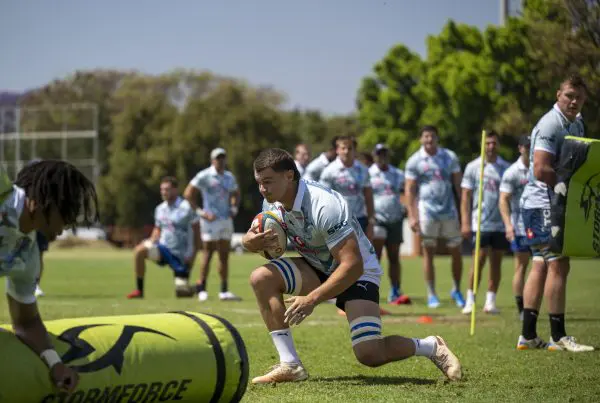
Ball in hand, ready to make a difference.
“I’ve known Vlok for a long time. He’s a great person and character. That’s most important – to fit in our team. You look at the places he’s been coaching and the level he’s been coaching with France and the knowledge that he brings. It’s something we can add to our team.
“He can work with us and he’s also going to be available for our juniors and they can tap into his knowledge. It’s great to have a person of his stature and coaching ability join as a consultant and we look forward to his contribution.”
Cilliers said the players, including flyhalf Curwin Bosch and scrumhalf Embrose Papier, have already welcomed him with open arms as he begins reshaping the union’s kicking philosophy ahead of a daunting first assignment against the All Blacks.
“I had a good chat with Curwin and with Embrose, asking how they see themselves and where they want to challenge themselves. They said they’re happy with a new voice coming in with experience, and they want to learn and get better.”
At an age when many coaches begin to slow down, Cilliers (58) insists his hunger remains undimmed, driven by a simple personal code he has carried through every stop of his career.
“I’m a firm believer in new seasons, and I’m very proud that wherever I go, I always try to leave a legacy and leave the place in a better position than when I arrived. I will never accept a job if there is no motivation, or just do it for the sake of doing it and to stay busy. This is a challenge, and I still have the same energy as 20 years ago.”