
The Vodacom Bulls’ build-up to next weekend’s Vodacom United Rugby Championship final against Leinster in Dublin carries all the hallmarks of a side that has travelled a long, testing road to reach this point, and a coach determined to keep the message grounded, focused and deeply human.
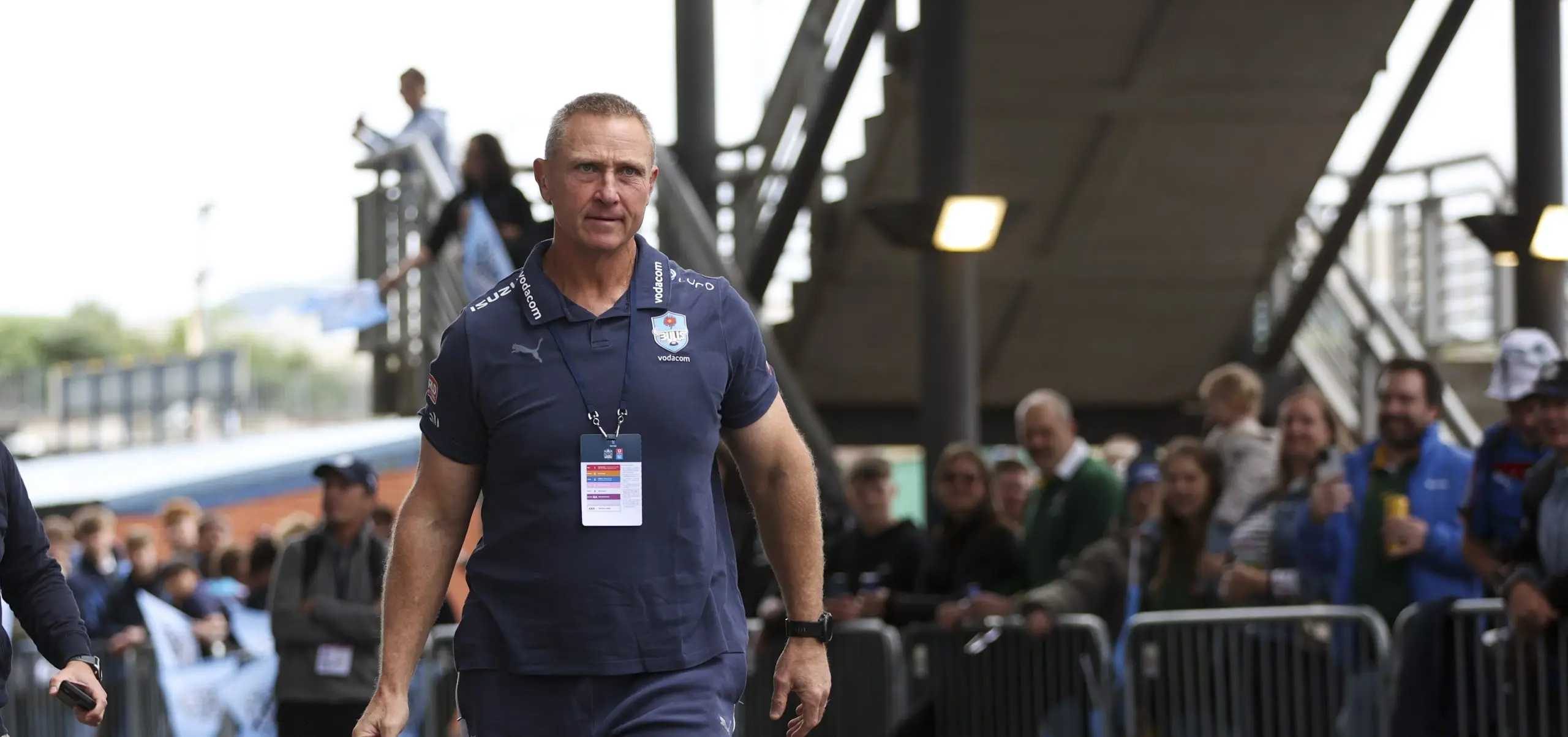
Speaking from Loftus Versfeld ahead of the showpiece, Johan Ackermann struck a tone that was equal parts pragmatic and reflective, balancing technical detail with a broader perspective on what this moment represents for his players and the franchise.
“We got through the game,” Ackermann said of last weekend’s dramatic semifinal, offering an early sign of cautious optimism. “There’s one or two guys that are a bit sore, but nothing that the doctor is concerned about. It looks like everybody that played on the weekend will be ready to go by next Friday.”
That clean bill of health is critical, because Ackermann is under no illusions about the scale of the challenge that awaits at Croke Park. Leinster, clinical and ruthless, have built a reputation for fast starts and scoreboard pressure, something the Vodacom Bulls will have to counter from the outset.
“I think our setpiece defence, just getting clarity on our roles, and then our one-on-one tackling, it’s not where it has to be,” he admitted. “You don’t want to chase 21-3 in every game.”
That reference cuts close to home. Against Glasgow in the semifinal, the Vodacom Bulls found themselves in precisely that predicament before clawing their way back, a resilience Ackermann values, but not a template he wants repeated.
“For the first time this season, we were a little bit slow at the breakdown in that first half. They got a few turnovers, so we never could build pressure. We just have to look after our breakdown better, look after the ball, and our first-phase defence.”
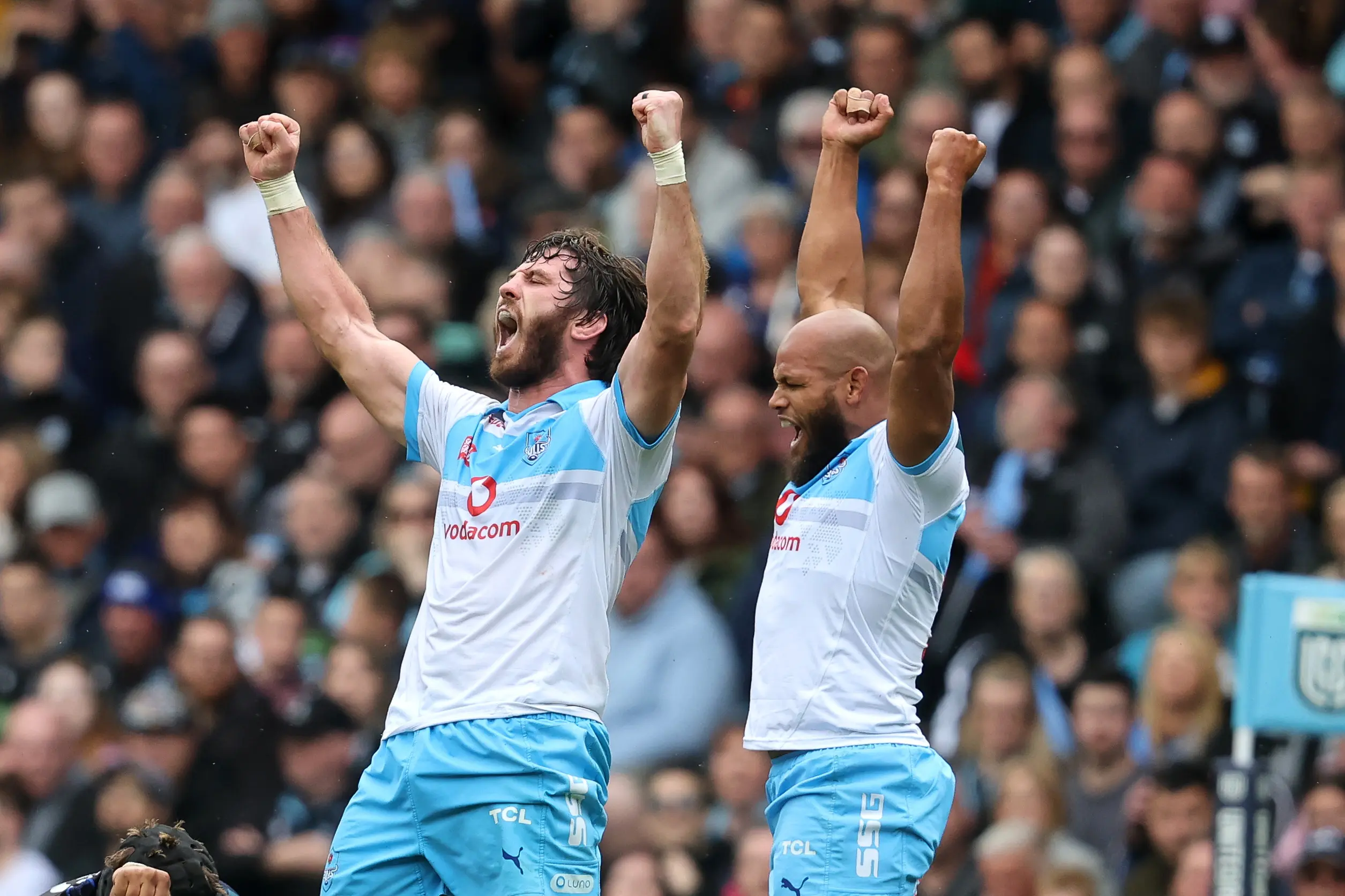
Vodacom Bulls’ Ruan Nortje and Nizaam Carr celebrate last weekend’s dramatic win.
©INPHO/Bryan Keane
Yet if the details are sharp, the broader narrative Ackermann is building at Loftus is not purely about tackles made or lineouts executed. It is rooted in something more fundamental: culture, and gratitude.
When reminded that he had defined success at the outset of the season as reaching a final, Ackermann acknowledged both the weight of expectation and the deeper purpose behind the campaign.
“Every team, when the season kicks off, says they want to play in the final, that’s probably the ultimate goal,” he said. “But for me, taking into account the history of this place and how passionate the supporters are, I knew that if we don’t get to the final, there will be a lot of questions asked.”
Now that they have arrived, however, he is quick to shift the focus away from outcome and onto meaning.
“The most important thing for me is to start building a culture and a philosophy, because there is a bigger picture,” he explained. “When players go through this team, how do they leave? Have we made a positive change or input into their lives?”
That philosophy is not abstract; it has been distilled into values, the first of which, Ackermann revealed, is gratitude.
“It’s a privilege to be here, a privilege to be at the Vodacom Bulls, to be part of rugby,” he said. “It’s not your right. You’re not entitled to be here. To get up in the morning and call this work, it’s a great privilege.”
It is a message that has clearly resonated within the squad, and one that has helped sustain them through a season that, at one stage, threatened to unravel.
“There were times that you start doubting if we’re going to turn things around,” Ackermann admitted candidly. “At one stage, you didn’t think about anything other than just to qualify, just to get into the playoffs.”
The turnaround was gradual, built on belief, consistency and a refusal to abandon the process.
“The players always came with good energy to training, they kept believing in the plans, the culture started to form, our values became more practical,” he said. “That game against Pau stood out. I saw a team really start believing in what we want to do.”
Now, on the eve of the biggest game of the season, Ackermann is determined not to overcomplicate matters, a lesson drawn from years of experience, including painful defeats in previous finals.
“If everything has worked for you during the season, why change it for a final?” he asked. “The moment you start over analysing and pulling back, you lose what got you there.”
Instead, the approach will be clear: stick to the plan, manage the travel, and arrive in Dublin ready to compete.
Discipline, however, looms as a non-negotiable.
“It’s definitely something we will highlight,” Ackermann said. “We failed that test against Glasgow with the two yellow cards. We can’t afford that.”
Against a Leinster side that thrives on scoreboard pressure, the consequences of ill-discipline are magnified.
“They probably win every game when they start fast and get a good lead,” Ackermann noted. “So discipline at the start and at the back end of the game is crucial if we want to give ourselves a chance.”
That sense of realism extends to his view of Leinster as a whole. There is no attempt to downplay the challenge, only a clear understanding of what it demands.
“The reality is they are a quality team,” he said. “If you concede early points too quickly, then you’re always fighting the scoreboard and now you have to do things out of the box.”
Still, if Leinster bring pedigree and precision, the Vodacom Bulls believe they bring something equally powerful: adaptability forged in adversity.
“One of our big things this season was to be an adaptable team,” Ackermann explained. “Whatever scenario comes, we must be able to deal with it.”
That adaptability has been evident in recent weeks, whether chasing games or protecting leads, and will be tested again in Dublin.
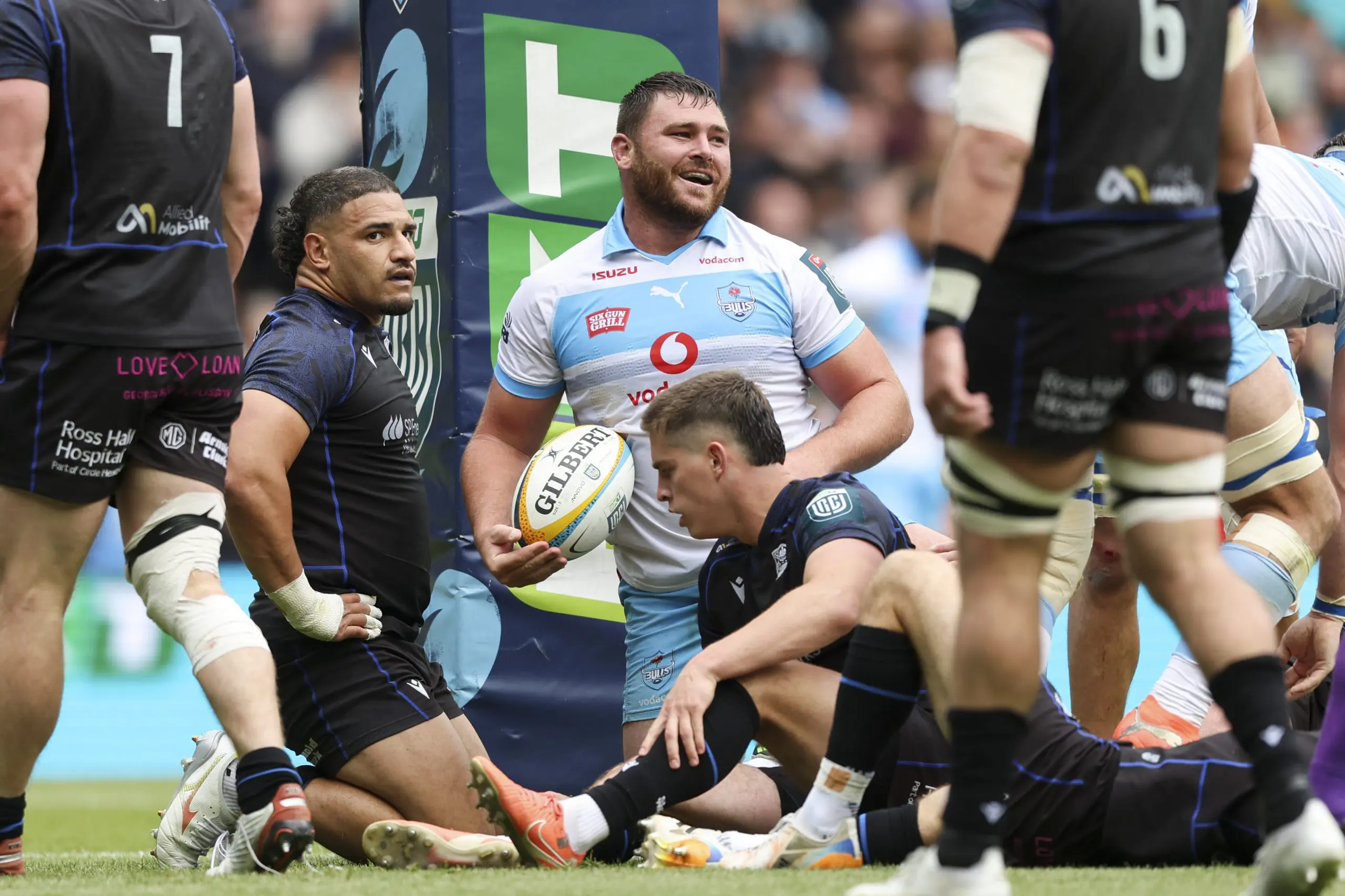
Vodacom Bulls’ Francois Klopper celebrates after scoring his side’s third try of the match
©INPHO/Ewan Bootman
History, meanwhile, offers lessons but no guarantees.
“Nothing before this – last season, past games – will count,” he said. “It’s going to boil down to 80 minutes.”
Ackermann has consulted players who experienced last year’s final defeat, taking on board their insights, but without allowing it to become an emotional burden.
“I’m a big believer in keeping things simple, doing what you control. We’ll take note of what they said, but we won’t change everything.”
Even the narrative of Leinster dominance, and threats like James Lowe, are handled with measured perspective.
“He’s a quality player, we have to contain him,” Ackermann said. “But every time you make a big thing of something, it goes the other way. So we’ll respect it, but not overplay it.”
In the end, the coach’s message circles back to belief, understated, but unmistakeable.
“I told the squad from the beginning, I believe we’ve got the talent to win this trophy,” he said. “Now, after many months of rugby, we’re there, we’ve got a shot.”
And in a final where margins are thin and narratives quickly rewritten, that belief, grounded in gratitude, discipline and simplicity, may yet define the Vodacom Bulls’ bid to finally convert promise into silverware.